

On November 17, 2026, at the "Economic and Financial Outlook 2027" forum organized by Fundesa, the Bank of Guatemala confirmed the economy will grow 4.3% this year and projected 4% for 2027. According to Banguat president Eddy Carpio Sam, the result exceeds the country's potential growth, estimated at 3.5%.
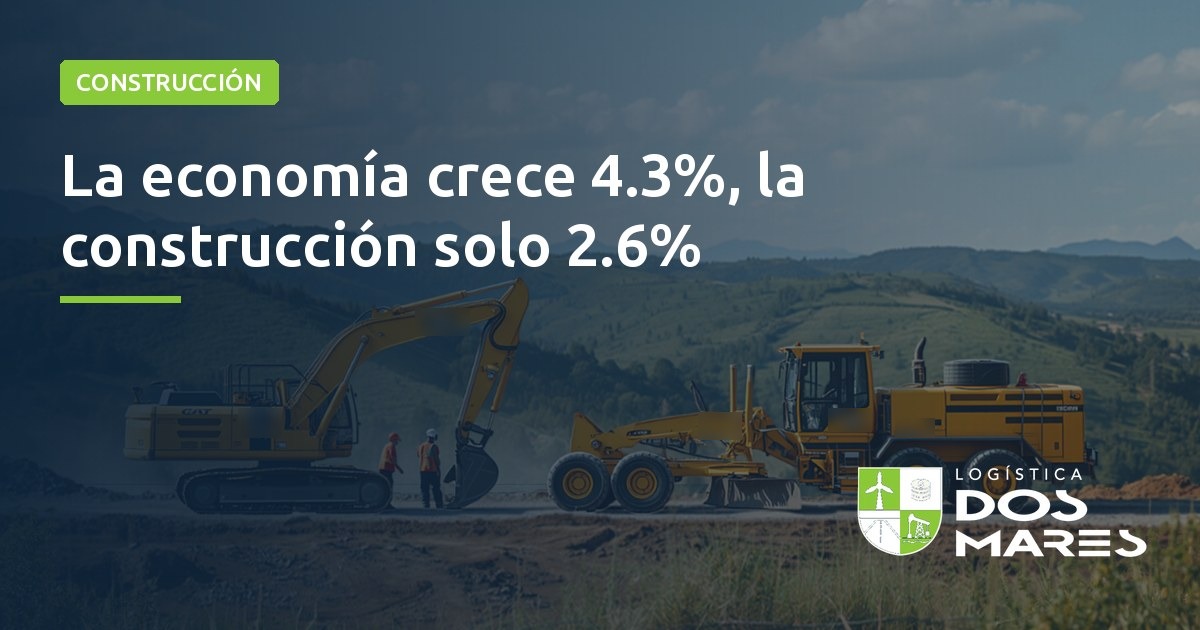
That is good news. But inside the figures there is a number that deserves attention from those of us who work in construction: construction will grow only 2.6% in 2026, below the economy's average and far from what the sector itself expected at the start of the year.
The figures from the forum
According to Infobae's coverage, Banguat presented these 2026 growth estimates by activity:
- Mining and quarrying: 8.9%
- Financial and insurance activities: 8.1%
- Administrative services: 5.8%
- Accommodation and food: 5.3%
- Manufacturing: 3.6%
- Education: 2.8%
- Construction: 2.6%
- Agriculture: 1.7%
In April, during the Construfer fair, the projection for construction was 4.7%, according to Prensa Latina. The gap between what was expected and what is now estimated is more than two points.
An economy with resources, but not enough building
What stands out is that the financial backdrop is favorable. According to data from the same forum:
- Remittances totaled US$22,725 million as of November 5, up 5.8% year on year.
- Bank credit to the private sector was growing 8.2% year on year, and productive financing 27.9%.
- Foreign direct investment is expected to reach US$2,100 million in 2026, up from US$1,900 million in 2025.
- The economic confidence indicator stood at 54.38 points, in expansion territory.
There is liquidity, credit and investment. What is not growing at the same pace is the country's capacity to turn those resources into physical works.
What the private sector is asking for
At the forum, representatives of CACIF, the World Bank, the IDB and academia agreed that stability needs conditions for projects to move forward. The main demands were:
- Road, port, airport and energy infrastructure.
- Faster administrative processes.
- Legal certainty.
- Worker training.
- Better links between producing regions and markets.
CACIF president Carlos Arias said the challenge is for growth to translate into formal jobs, better incomes and opportunities for the young people who enter the labor market every year. Construction is one of the sectors that creates the most jobs, so its lag weighs on that goal.
The risks flagged at the forum
The 2027 outlook includes external factors that could raise costs or slow down works:
- Oil prices and geopolitical conflicts, which feed directly into the cost of asphalt, transport and machinery.
- Trade tensions that affect imports of equipment and materials.
- The US economy, on which remittances and much of the investment depend.
Inflation is helping: it fell to 4.38% in October from 4.69% in September, and Banguat expects to close the year at 4.25%. Stable prices make it easier to budget multi-year works.
Our reading
The problem is not a lack of demand for works. That same month, the four-lane expansion of the Atlantic Highway between El Rancho and Teculután began, with US$175 million in international financing and a 36-month schedule. The projects exist; what sets the sector's pace is the time between a project's approval and the moment machinery reaches the site.
Permits, rights of way, contracting and execution capacity all come into play. Every month of delay in that chain shows up in construction GDP, in employment and in the final cost of the works.
For 2027, with projected growth of 4% and an estimated fiscal deficit of 4.4% of GDP, the room for public investment will be tighter. That makes it even more important to execute well what is already approved, to combine public funds with international financing and to rely on schemes such as public-private partnerships.
At Logística Dos Mares we have worked since 2007 on road, port and airport civil works, and we see this gap up close: the country has the projects and the resources, and the challenge for 2027 is to execute them on time.